

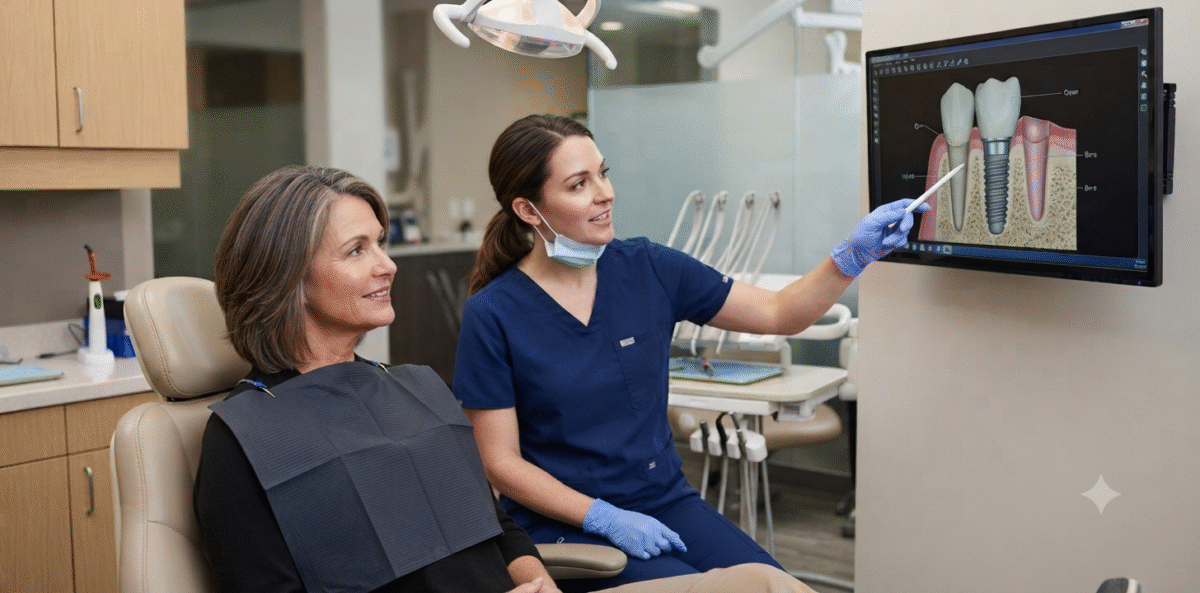

Dental implants are designed to provide a stable, long-term replacement for missing teeth. But even a well-maintained implant needs regular dental care.
During an implant checkup, your dentist looks at more than just whether the replacement tooth appears normal. They also evaluate the gums, bone, implant stability, and surrounding tissues to make sure everything is healthy.
So, what exactly does your dentist look for when checking an existing dental implant?
What Is a Dental Implant?
A dental implant is a small post, usually made from titanium or another biocompatible material, that is placed into the jawbone to replace the root of a missing tooth.
Once the implant has integrated with the bone, an abutment and dental crown are typically attached to complete the restoration.
Because the implant is supported by the jawbone, maintaining the health of the tissues around it is essential for its long-term function.
Why Do Dental Implants Need Regular Evaluation?
Dental implants cannot develop cavities in the same way natural teeth can, but the tissues surrounding them can still experience problems.
Plaque and bacteria can collect around an implant and contribute to inflammation or infection. In some cases, the bone supporting the implant may also be affected.
Regular evaluations allow your dentist to identify potential concerns before they become more complicated.
What Does Your Dentist Check During an Implant Exam?
Your dentist may evaluate several areas during an implant examination.
The Implant Crown
First, your dentist checks the visible replacement tooth.
They may look for:
- Cracks or damage
- Excessive wear
- Changes in appearance
- Problems with the bite
- Loose or damaged components
The crown should function comfortably and work properly with your surrounding teeth.
The Gums Around the Implant
Healthy gum tissue around an implant is an important part of maintaining the restoration.
Your dentist may look for redness, swelling, bleeding, or tenderness around the implant.
They may also gently measure the tissue around the implant to check for changes that could indicate inflammation or other concerns.
Implant Stability
Your dentist may assess whether the implant feels stable and properly supported.
An implant that has become noticeably loose requires professional evaluation. While movement can sometimes involve the crown or another component rather than the implant itself, it should never be ignored.
Bone Supporting the Implant
The jawbone provides essential support for the implant.
Your dentist may use dental X-rays when appropriate to evaluate the bone around the implant and look for changes that aren’t visible during a routine examination.
Comparing current images with previous ones can help your dentist monitor the implant over time.
What Is Peri-Implant Disease?
One condition dentists watch for around implants is peri-implant disease.
It generally begins with inflammation of the tissues surrounding an implant. If the problem progresses, it can affect the bone supporting the implant.
Signs that may require evaluation include:
- Bleeding around the implant
- Swollen or irritated gums
- Persistent discomfort
- Pus or drainage
- Increasing gum recession
- Changes in the way the implant feels
- Implant or crown movement
Not every symptom means the implant is failing, but unusual changes should be evaluated by a dentist.
How Do X-Rays Help?
Dental X-rays can provide information that cannot be seen by simply examining the implant.
Depending on the situation, imaging may help your dentist evaluate:
- Bone levels around the implant
- Changes in supporting bone
- The position of the implant
- Nearby teeth and structures
- Potential complications
Your dentist will determine which type of imaging is appropriate based on your individual needs.
What If Your Implant Is Healthy?
If your implant and surrounding tissues appear healthy, your dentist may simply recommend continuing with routine maintenance.
This generally includes good daily oral hygiene, professional cleanings, and regular dental examinations.
Even though the implant itself cannot develop a cavity, plaque and bacteria around the restoration can still affect your gums and supporting tissues.
How Can You Protect Your Dental Implant?
Taking care of an implant is similar to caring for your natural teeth in many ways.
You can help maintain your implant by:
- Brushing twice a day
- Cleaning between your teeth and around the implant
- Keeping regular dental appointments
- Following your dentist’s cleaning recommendations
- Avoiding using your teeth to bite hard objects
- Contacting your dentist if you notice changes around the implant
Your dentist may recommend specific brushes, floss, interdental cleaners, or other tools depending on your restoration.
Can an Implant Last a Lifetime?
Dental implants can provide long-term tooth replacement, but their success depends on several factors.
Oral hygiene, gum health, bone support, lifestyle habits, overall dental care, and the condition of the crown can all affect how well an implant performs over time.
Regular professional monitoring gives your dentist an opportunity to identify and manage problems early.
When Should You Have an Implant Checked?
Don’t wait for your next routine appointment if you notice something unusual.
Contact your dentist if you experience:
- Pain or persistent discomfort
- Bleeding or swelling
- A loose crown or implant
- Changes in your bite
- Gum recession around the implant
- Pus or unusual drainage
- Difficulty chewing
Early evaluation can help determine what’s causing the problem and what treatment may be needed.
A dental implant is an investment in your oral health, and regular evaluations are an important part of protecting that investment.
At Ziva Dental, your dentist can assess the condition of your implant, surrounding gums, supporting bone, and restoration to help keep your smile healthy and functional.
If you have an existing dental implant and haven’t had it evaluated recently, schedule a dental visit to make sure it continues to receive the care it needs.