

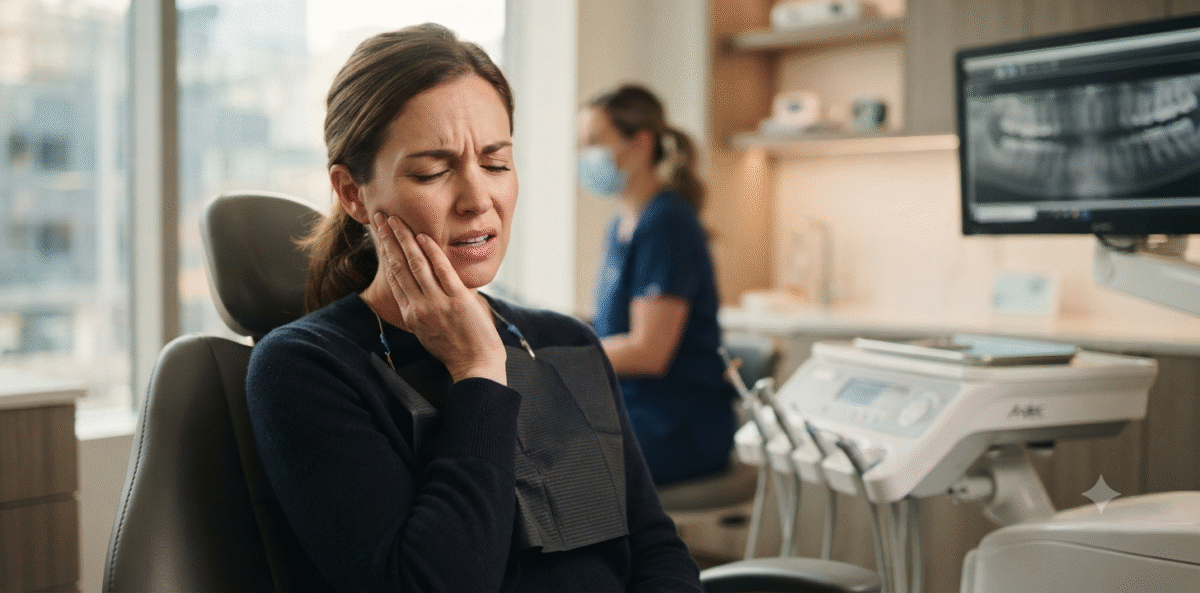

When people think about a dental emergency, severe tooth pain is often the first thing that comes to mind. But not every dental emergency causes a typical toothache. In some cases, a dental problem may appear as swelling, bleeding, a broken tooth, unusual sensitivity, or even a change in how your teeth fit together.
Recognizing these warning signs can help you know when to seek professional dental care instead of waiting for symptoms to become more severe.
At Ziva Dental, understanding the difference between routine dental concerns and potential emergencies can help patients make informed decisions about when to contact their dental team.
A Dental Emergency Does Not Always Hurt
Pain is an important warning sign, but its absence does not necessarily mean that a dental problem is minor.
Some dental conditions may cause little or no pain in the beginning. For example, a damaged tooth may not hurt immediately after an injury, while an infection may initially present with swelling or tenderness rather than a severe toothache.
This is why it is important to pay attention to changes in your mouth even when you are not experiencing significant pain.
Swelling Can Be a Warning Sign
Swelling around a tooth, gum, jaw, or face can indicate an underlying dental problem that needs prompt evaluation.
Dental infections can sometimes cause swelling as the body responds to bacteria. Swelling may occur alongside pain, but it can also appear before significant discomfort develops.
If swelling is rapidly increasing or is accompanied by difficulty breathing or swallowing, seek emergency medical care immediately.
For less severe swelling, contacting your dentist promptly can help determine the cause and appropriate next steps.
A Broken or Cracked Tooth May Not Cause Immediate Pain
A tooth can crack or break because of an injury, biting on something hard, decay, or normal wear over time. Not every cracked tooth causes immediate or intense pain.
You may instead notice:
- A sharp edge on the tooth
- Sensitivity to hot or cold
- Pain when biting
- A visible crack or missing piece
- A change in the way your teeth come together
Even if the tooth feels relatively comfortable, damage can sometimes worsen with continued use. Having it evaluated can help determine whether treatment is needed to protect the remaining tooth structure.
A Knocked-Out Tooth Requires Immediate Attention
A tooth that has been completely knocked out is a dental emergency. Acting quickly may improve the chances of preserving the tooth.
If an adult tooth is knocked out, handle it carefully by the crown rather than the root. If possible, gently rinse it without scrubbing and try to keep it moist. Depending on the circumstances, it may be possible to place the tooth back into its socket, but this should only be done if you can do so safely and comfortably.
Contact a dentist immediately for guidance and seek urgent care.
Time can be an important factor when dealing with a knocked-out permanent tooth.
Uncontrolled Bleeding Should Not Be Ignored
Minor bleeding after certain dental procedures can be expected, but unexplained or persistent oral bleeding may require professional evaluation.
Bleeding can have several possible causes, including injury, gum problems, or dental procedures. If bleeding does not stop despite following appropriate first-aid measures, contact your dental provider or seek urgent medical attention depending on the severity.
Heavy or uncontrolled bleeding should be treated as an emergency.
Severe Dental Sensitivity Can Signal a Problem
Occasional mild sensitivity does not necessarily indicate an emergency. However, sudden or intense sensitivity can sometimes be associated with tooth decay, cracks, exposed tooth structure, or other dental concerns.
Pay attention to how long the sensitivity lasts and what triggers it.
If discomfort continues after the hot or cold stimulus is gone, becomes increasingly intense, or occurs without an obvious trigger, a dental examination can help identify the underlying cause.
A Dental Abscess May Not Start With Severe Pain
A dental abscess is an infection that can develop around a tooth or in the surrounding tissues. While an abscess may cause significant pain, symptoms can vary.
Possible signs include:
- Swelling in the gums or face
- A pimple-like bump on the gums
- Persistent bad taste
- Fever
- Tenderness
- Difficulty chewing
- Sensitivity
- Swollen lymph nodes
A dental abscess requires professional treatment. Dental infections should not be left untreated because they can spread beyond the original area.
An Injury Can Be an Emergency Even Without Pain
Accidents involving the mouth can damage teeth, gums, or surrounding structures even when there is little immediate discomfort.
After an injury, look for changes such as a chipped or loose tooth, bleeding, swelling, discoloration, or difficulty biting normally.
A dental professional can assess the affected area and determine whether there is damage that is not immediately visible.
Changes in Your Bite Can Be a Clue
Your bite can provide useful information about the condition of your teeth and jaw. If your teeth suddenly feel different when you close your mouth, it may be related to an injury, a damaged restoration, a loose tooth, or another dental concern.
A sudden change in your bite should not be ignored, particularly if it occurs after an accident or alongside swelling or discomfort.
When Should You Contact a Dentist?
Not every dental issue requires an emergency appointment, but certain symptoms deserve prompt attention.
Contact your dental office if you experience:
- A broken or severely cracked tooth
- A knocked-out or significantly loosened permanent tooth
- Significant swelling
- Severe or persistent dental pain
- Signs of infection
- Persistent or heavy bleeding
- Dental trauma
- Sudden changes in your bite
If you are unsure whether your symptoms qualify as a dental emergency, contacting your dental team can help you determine what to do next.
Do Not Wait for Severe Pain
One of the biggest misconceptions about dental emergencies is that they must always involve intense pain. In reality, dental emergencies can present in many different ways.
Swelling, trauma, bleeding, a damaged tooth, or sudden changes in your mouth can all be reasons to seek professional advice. Recognizing these signs early can help you receive appropriate care before the problem becomes more complicated.
At Ziva Dental, patients can discuss sudden changes, injuries, or concerning dental symptoms with their dental team and determine the appropriate next step. If you are experiencing an unexpected dental problem, schedule a consultation to have your symptoms evaluated and learn about your treatment options.