

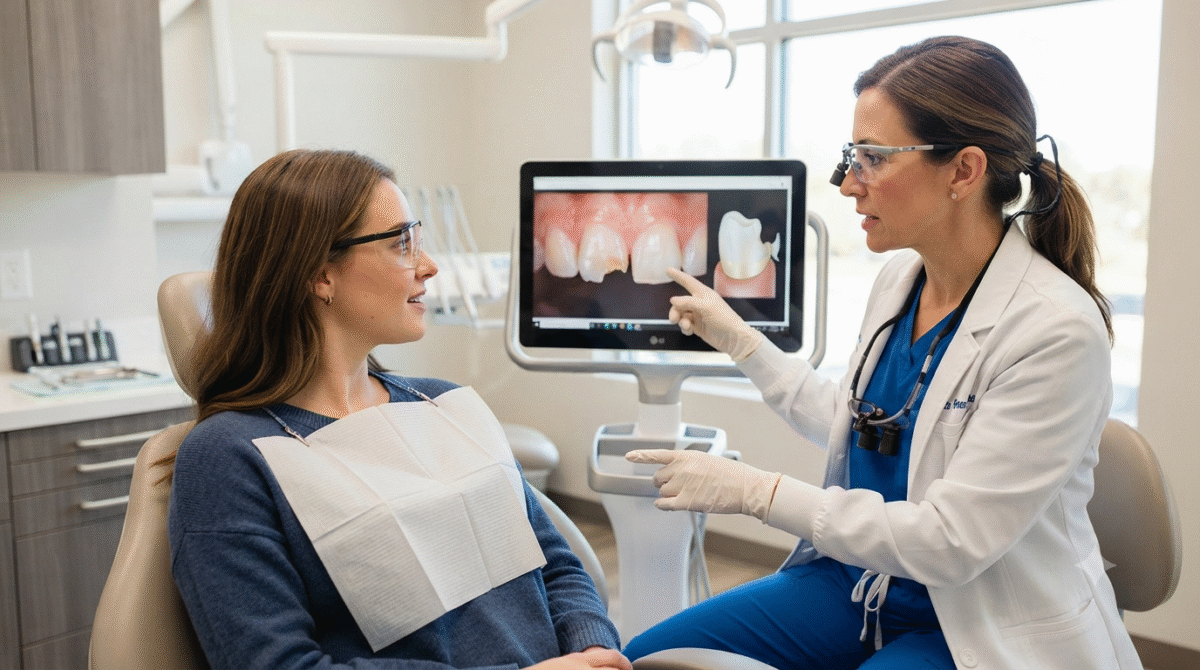

A small chip or worn edge on a tooth can change the appearance of your smile and sometimes affect how your teeth come together when you bite. Fortunately, not every worn or damaged tooth edge requires extensive dental treatment.
In certain cases, a composite filling can be used to rebuild the missing portion of the tooth. This minimally invasive approach can restore the tooth’s shape while preserving much of the natural tooth structure.
Whether composite bonding is appropriate depends on why the tooth edge became worn, how much structure has been lost, and the condition of the tooth.
What Is a Composite Filling?
Composite resin is a tooth-colored dental material commonly used to repair cavities, chips, worn areas, and other minor tooth damage.
The material can be carefully shaped and bonded directly to the tooth. Once placed, it can be adjusted to recreate the tooth’s natural contours and polished to achieve a smooth appearance.
Because composite resin can be matched to the color of your natural teeth, it is often used when appearance is an important consideration.
How Can a Composite Repair a Worn Tooth Edge?
When only a small amount of the tooth edge has been lost, a dentist may be able to add composite resin to rebuild the area.
The dentist first prepares the tooth surface so the material can bond properly. Composite resin is then applied and shaped to recreate the missing portion of the edge.
A special curing light hardens the material in place. The dentist can then refine the shape and polish the restoration so it fits comfortably with the surrounding teeth.
The process can often be completed without removing large amounts of healthy tooth structure.
Why Does a Tooth Edge Become Worn?
Before repairing a worn edge, it is important to understand why the wear occurred.
Tooth edges can become worn because of several factors, including:
- Normal wear over time
- Teeth grinding or clenching
- Biting hard objects
- Nail biting or using teeth as tools
- Acid erosion
- Previous chips or trauma
- Uneven bite forces
If the underlying cause is not addressed, the newly repaired edge may experience the same stress that caused the original damage.
Your dentist may therefore evaluate your bite and discuss habits that could contribute to continued wear.
When Is Composite Repair a Good Option?
Composite repair may be appropriate when the damaged area is relatively small and the remaining tooth structure is healthy.
It can be particularly useful for minor chips, slight edge wear, or small areas where the tooth has lost its original contour.
The dentist will consider the location of the tooth, the amount of material required, your bite, and the forces placed on that area before recommending composite resin.
What Are the Benefits of Composite Repair?
One of the main benefits is that composite treatment can often preserve natural tooth structure.
Unlike treatments that require more extensive reshaping of the tooth, composite resin can be added directly to the affected area in many cases.
Other potential advantages include:
- Tooth-colored appearance
- Conservative treatment
- Ability to reshape small damaged areas
- Relatively quick procedure
- Repairability if the material becomes damaged
However, composite resin is not suitable for every worn tooth. Your dentist needs to determine whether it can withstand the forces placed on the tooth.
How Long Can a Composite Repair Last?
The lifespan of a composite restoration varies from person to person.
The location of the repair, the amount of biting force, oral hygiene, diet, and habits such as grinding or clenching can all affect its durability.
A composite edge repair may eventually need polishing, repair, or replacement. It is also possible for the material to chip under significant force.
Following your dentist’s recommendations and avoiding habits that place unnecessary stress on the teeth can help protect the restoration.
What If the Tooth Is More Severely Worn?
Composite resin may not be the best choice when a significant amount of tooth structure has been lost or the tooth is extensively weakened.
Depending on the condition of the tooth, your dentist may discuss other restorative options. The appropriate treatment depends on the amount of remaining healthy tooth structure, the cause of the damage, the tooth’s function, and your overall oral health.
A comprehensive examination is important before choosing a treatment.
Can Composite Repair Improve the Appearance of the Smile?
Yes, in appropriate cases, composite resin can improve the appearance of a worn or chipped tooth edge.
The dentist can shape the material to restore the tooth’s proportions and blend its color with the surrounding teeth. Small changes to the edges of front teeth can sometimes make a noticeable difference in the overall appearance of the smile.
The goal is not simply to add material but to recreate a shape that looks natural and functions properly.
Your Bite Matters More Than You May Think
A worn tooth edge may sometimes be connected to the way your teeth contact one another.
If the repaired tooth receives excessive force during biting or if you frequently clench or grind your teeth, the composite may be more likely to chip or wear again.
That is why your dentist may evaluate your bite before completing an edge repair and may recommend ways to reduce excessive forces when necessary.
Is Composite Repair Right for Your Worn Tooth?
A worn tooth edge does not automatically require a crown or another extensive restoration. For the right patient, composite resin can provide a conservative way to rebuild a small amount of lost tooth structure while maintaining a natural appearance.
At Ziva, an evaluation can help determine why your tooth edge has worn down and whether composite repair is an appropriate option.
Schedule a consultation with Ziva to have your worn or chipped tooth evaluated and explore the most suitable way to restore its shape and function.