

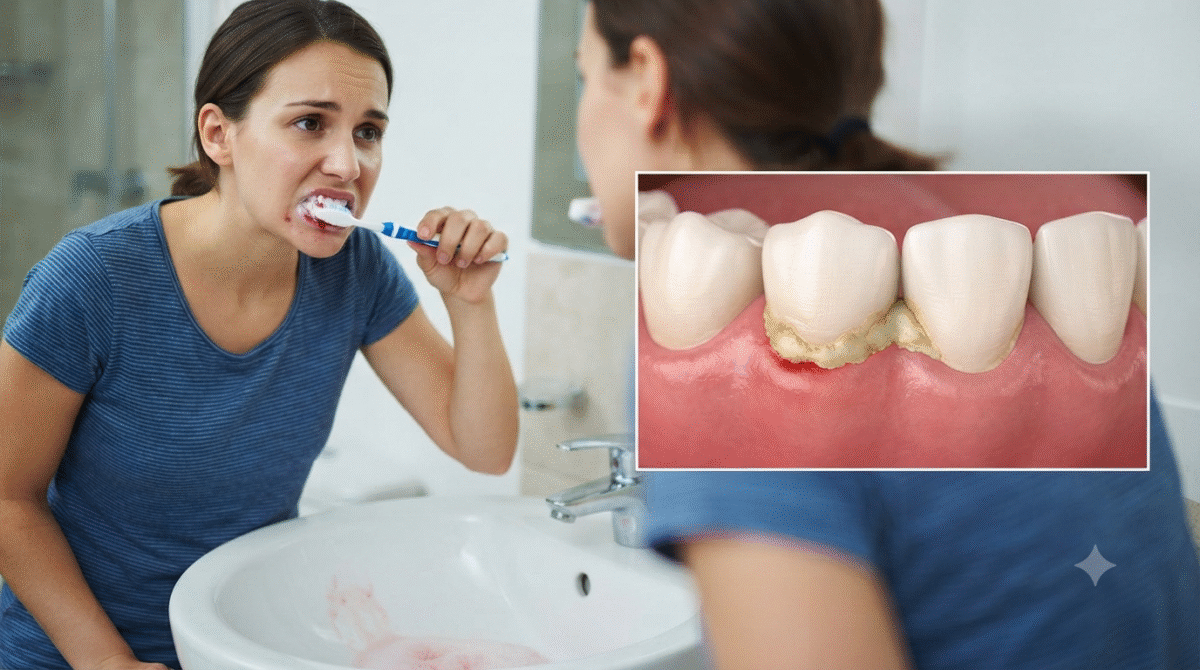

Have you ever noticed pink or red in the sink after brushing your teeth? While it may be tempting to ignore it—especially if it only happens occasionally—bleeding gums are not something you should consider normal. In most cases, bleeding during brushing is an early warning sign that your gums need attention.
Healthy gums shouldn’t bleed when you brush or floss. Although the cause isn’t always serious, persistent bleeding can indicate underlying oral health issues that may worsen if left untreated.
Let’s explore the most common reasons why your gums may bleed during brushing and what you can do to restore your gum health.
- Gingivitis: The Most Common Cause
The leading cause of bleeding gums is gingivitis, the earliest stage of gum disease.
Gingivitis develops when plaque—a sticky film of bacteria—builds up along the gumline. If plaque isn’t removed through proper brushing, flossing, and regular professional cleanings, it can irritate the gums, causing inflammation.
Common signs of gingivitis include:
- Bleeding while brushing or flossing
- Red or swollen gums
- Tender gums
- Persistent bad breath
The good news is that gingivitis is reversible with early treatment and improved oral hygiene.
- Brushing Too Hard
Many people believe brushing harder cleans teeth better, but that’s not the case.
Using excessive force or a toothbrush with hard bristles can irritate your gums and cause them to bleed. Over time, aggressive brushing may also contribute to gum recession and enamel wear.
Instead:
- Use a soft-bristled toothbrush.
- Brush gently using small, circular motions.
- Brush for about two minutes twice a day.
Gentle, consistent brushing is much more effective than scrubbing aggressively.
- Not Flossing Regularly
If your gums bleed when you first start flossing, don’t assume flossing is causing the problem.
In many cases, the bleeding is actually a sign of inflammation caused by plaque and bacteria trapped between the teeth. As you continue flossing daily, the inflammation often decreases, and the bleeding improves within a week or two.
Flossing is an essential part of maintaining healthy gums because your toothbrush cannot effectively clean between your teeth.
- Plaque and Tartar Buildup
Even with regular brushing, some plaque can harden into tartar if it’s not removed promptly.
Unlike plaque, tartar cannot be removed at home with a toothbrush. It requires professional cleaning by a dental hygienist or dentist.
Tartar buildup can:
- Irritate the gums
- Increase inflammation
- Lead to persistent bleeding
- Raise the risk of developing more advanced gum disease
Routine dental cleanings help remove tartar and keep your gums healthy.
- Certain Medical Conditions and Medications
Sometimes bleeding gums may be related to factors beyond your oral hygiene routine.
Certain conditions and medications can increase your likelihood of gum bleeding, including:
- Diabetes
- Blood clotting disorders
- Vitamin C or vitamin K deficiencies
- Hormonal changes during pregnancy
- Blood-thinning medications
If your gums bleed frequently despite good oral hygiene, let your dentist know about your medical history and any medications you’re taking.
- Advanced Gum Disease
If gingivitis isn’t treated, it can progress to periodontitis, a more serious form of gum disease.
As the condition advances, the gums begin to pull away from the teeth, creating pockets where bacteria collect. Over time, this can damage the supporting bone and tissues.
Symptoms may include:
- Persistent bleeding gums
- Gum recession
- Loose teeth
- Bad breath
- Pain while chewing
Unlike gingivitis, periodontitis cannot be reversed, but it can be managed with professional treatment to help prevent further damage.
How to Prevent Bleeding Gums
The good news is that many cases of bleeding gums can be prevented with consistent oral care.
Here are a few healthy habits to follow:
- Brush twice a day using a soft-bristled toothbrush and fluoride toothpaste.
- Floss daily to remove plaque between your teeth.
- Replace your toothbrush every three to four months or sooner if the bristles become frayed.
- Eat a balanced diet rich in vitamins and minerals that support gum health.
- Avoid smoking and other tobacco products.
- Visit your dentist regularly for professional cleanings and checkups.
These simple habits can significantly reduce your risk of gum disease and keep your smile healthy.
When Should You See a Dentist?
Occasional minor bleeding after changing your flossing routine may improve within a few days. However, you should schedule a dental appointment if:
- Your gums continue to bleed regularly.
- Your gums are swollen, red, or painful.
- You notice persistent bad breath.
- Your gums appear to be pulling away from your teeth.
- Your teeth feel loose.
- Bleeding occurs without brushing or flossing.
Early diagnosis and treatment can prevent more serious dental problems and protect your oral health.
Healthy Gums Are the Foundation of a Healthy Smile
Bleeding gums during brushing are often your body’s way of telling you that something isn’t quite right. Whether the cause is gingivitis, plaque buildup, aggressive brushing, or another underlying issue, addressing the problem early can help prevent more serious complications.
The good news is that healthy gums are achievable with proper oral hygiene, regular dental visits, and prompt treatment when needed. If you’ve noticed bleeding gums, don’t ignore the warning signs. Schedule a dental checkup so your dentist can identify the cause and recommend the best treatment to keep your smile healthy for years to come.