

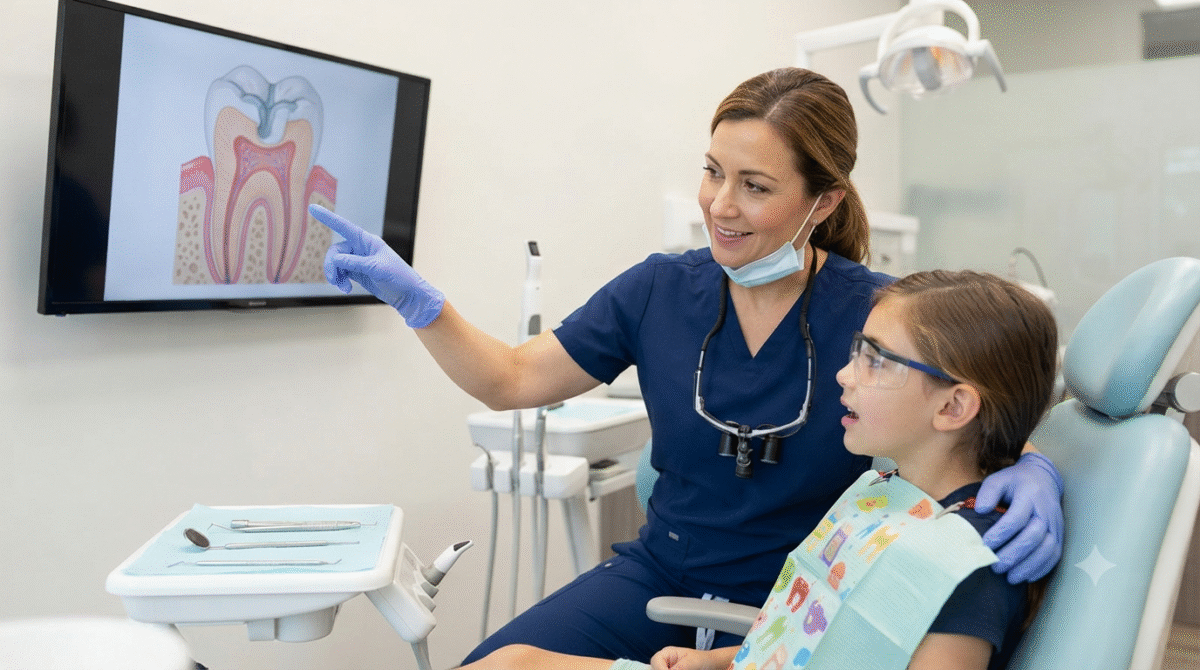

Every parent wants to keep their child’s smile healthy, but cavities can develop even when kids brush their teeth regularly. The chewing surfaces of the back teeth have deep grooves that easily trap food and bacteria, making them one of the most common places for tooth decay to start. That’s why many dentists recommend dental sealants as an extra layer of protection.
Dental sealants are a quick, painless, and effective way to help prevent cavities before they happen. One of the most common questions parents ask is, “When should my child get dental sealants?” The answer depends on when the permanent molars come in, but timing is important to get the greatest benefit.
What Are Dental Sealants?
Dental sealants are thin, protective coatings applied to the chewing surfaces of the back teeth, also known as the molars. These teeth have tiny grooves that are difficult to clean with a toothbrush alone.
The sealant fills these grooves, creating a smooth surface that keeps food particles and bacteria from settling in. This greatly reduces the risk of cavities in the areas where they’re most likely to occur.
The procedure is completely painless and usually takes only a few minutes per tooth.
Why Are Molars More Likely to Get Cavities?
Unlike the front teeth, molars have uneven surfaces with deep pits and grooves. Even children who brush well may struggle to clean these areas properly.
When food and plaque remain trapped in these grooves, bacteria produce acids that gradually wear away the enamel and cause cavities.
Sealants act as a protective shield, helping to keep these vulnerable areas clean and protected.
What Is the Best Age to Get Dental Sealants?
The ideal time to place dental sealants is soon after the permanent molars erupt. This protects the teeth before decay has a chance to develop.
Ages 6 to 7
The first permanent molars usually appear around the age of six or seven.
These are some of the most important teeth because they help with chewing and guide the alignment of other permanent teeth. Since they are brand new, applying sealants early helps protect them during the years they’re most vulnerable to cavities.
Ages 11 to 13
The second set of permanent molars generally erupts between the ages of eleven and thirteen.
These teeth can also benefit from sealants shortly after they appear. Applying them early provides long-term protection while reducing the risk of future dental treatment.
Can Younger Children Get Sealants?
In some cases, yes.
If a child’s baby molars have deep grooves and they’re at a high risk of cavities, a dentist may recommend placing sealants on selected baby teeth.
Although baby teeth eventually fall out, they play an important role in chewing, speech development, and holding space for permanent teeth. Keeping them healthy is still essential.
Are Sealants Only for Children?
Not at all.
Teenagers who didn’t receive sealants when they were younger may still benefit, provided their molars are healthy and free from fillings.
Some adults can also be good candidates, especially if they have deep grooves in their molars and haven’t developed decay in those areas.
Your dentist can determine whether sealants are appropriate based on your individual oral health.
How Are Dental Sealants Applied?
Getting dental sealants is one of the easiest preventive treatments in dentistry.
The process usually includes:
- Cleaning the tooth thoroughly.
- Drying the tooth.
- Applying a special bonding solution.
- Placing the liquid sealant into the grooves.
- Hardening the sealant with a curing light.
There’s no drilling, no injections, and no recovery time. Patients can eat and drink normally shortly after the appointment.
How Long Do Dental Sealants Last?
Dental sealants are designed to last for several years. With proper care, many remain effective for five to ten years.
During routine dental checkups, your dentist will examine the sealants to ensure they’re still intact. If one becomes chipped or worn, it can usually be repaired or replaced quickly.
Do Sealants Replace Brushing and Flossing?
No.
Sealants protect only the chewing surfaces of the back teeth. The sides of the teeth and the spaces between them still need to be cleaned every day.
For the best protection against cavities, children should continue to:
- Brush twice a day with fluoride toothpaste.
- Floss once a day.
- Limit sugary snacks and drinks.
- Visit the dentist regularly for checkups and cleanings.
Sealants work best when they’re part of a complete oral hygiene routine.
Are Dental Sealants Safe?
Yes.
Dental sealants have been used safely for many years and are recommended by dental professionals around the world as an effective way to prevent cavities.
They are made from durable dental materials that bond securely to the tooth surface and provide long-lasting protection.
If you have any concerns about the materials used, your dentist can explain the treatment and answer your questions.
How Effective Are Dental Sealants?
Dental sealants can significantly reduce the risk of cavities in the molars, especially during childhood when these teeth are most susceptible to decay.
Children who receive sealants soon after their permanent molars erupt are less likely to develop cavities in those teeth compared with children who don’t have sealants.
Preventing cavities early also reduces the need for fillings and other restorative treatments later in life.
How Do You Know If Your Child Needs Sealants?
Every child is different, so the best way to know is through a dental examination.
Your dentist may recommend sealants if your child:
- Has newly erupted permanent molars.
- Has deep grooves in the back teeth.
- Has had cavities before.
- Is at a higher risk of tooth decay.
- Finds it difficult to clean the back teeth effectively.
Early evaluation allows your dentist to protect the teeth before problems develop.
Dental sealants are one of the easiest and most effective ways to protect children from cavities. The best time to get them is soon after the permanent molars come in, usually between the ages of 6 and 13. When combined with daily brushing, flossing, healthy eating habits, and regular dental visits, sealants can help keep your child’s smile healthy for years to come.
Schedule your child’s dental checkup today and book a consultation with our team to find out if dental sealants are the right choice for long-lasting cavity protection.